Strimmer and brush cutter brushes provide an effective mechanical solution for removing weeds from kerbs, paving, car parks and other hard-to-reach areas. They allow operators to tackle vegetation in places that larger weed-removal machines cannot easily reach.
Formseal offers a range of strimmer wire brushes and synthetic brushes designed for different surfaces and types of weed growth. The right choice depends on the application, the surface and the type of vegetation you need to remove.
WHY USE A WEED BRUSH ON A STRIMMER OR BRUSH CUTTER?
A strimmer or brush cutter is highly manoeuvrable, making it particularly useful for weed removal around kerbs, edges, posts, paving and other A strimmer or brush cutter is highly manoeuvrable, making it particularly useful for weed removal around kerbs, edges, posts, paving and other obstacles.
When the machine manufacturer permits the attachment, fitting a suitable weed brush allows operators to mechanically remove unwanted vegetation from hard surfaces.
TYPICAL APPLICATIONS INCLUDE:
- Kerbs and road edges
- Block paving and decorative paving
- Car parks
- Paths and paved areas
- Areas around posts and street furniture
- Locations that are difficult to reach with larger machinery
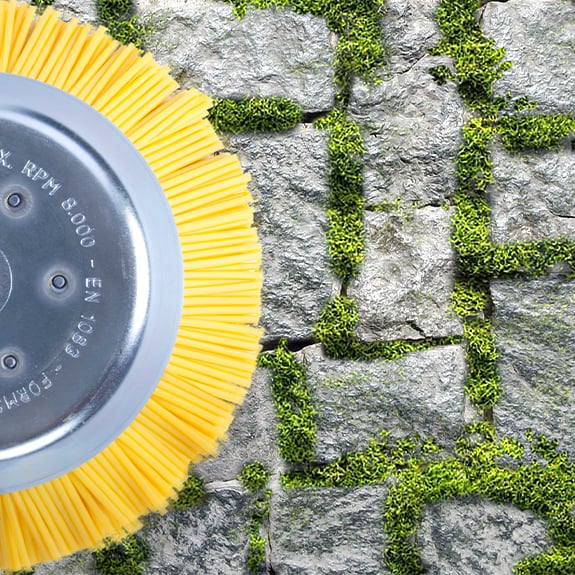
Using the right brush can make it easier to tackle weeds in areas where larger equipment may not be practical.
STRIMMER WIRE BRUSH OR SYNTHETIC BRUSH: WHICH SHOULD YOU CHOOSE?
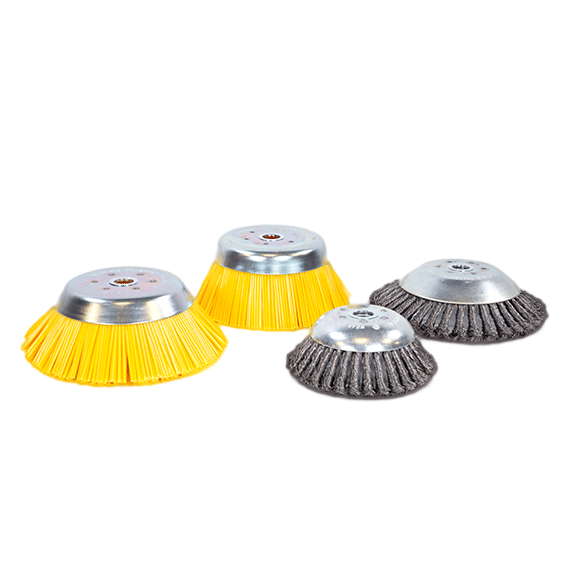
Formseal offers two main types of weed brush: twisted steel wire and synthetic PP filament. Each is designed for different applications, depending on the type of weed growth and the surface being cleaned.
TWISTED STEEL STRIMMER WIRE BRUSHES FOR HEAVY WEED GROWTH
For stubborn and established weeds, a strimmer wire brush with twisted steel knots provides an aggressive cleaning action.
These brushes are particularly suited to demanding applications where stronger mechanical weed removal is required, such as removing tough vegetation from robust surfaces like concrete and stone.
The twisted steel wires provide additional strength, making them suitable for more intensive cleaning tasks.
SYNTHETIC STRIMMER BRUSHES FOR LIGHTER WEEDS
Where a less aggressive brush is required, synthetic strimmer brushes use strong PP filaments to remove lighter vegetation.
These brushes are particularly suitable for lighter weed growth and decorative paving, where a gentler cleaning action may be preferred.
Because the brush material is synthetic rather than steel, the brushes are also spark-free, making them an alternative for applications where sparks from steel wire should be avoided.
WHAT SHOULD YOU CHECK BEFORE CHOOSING A STRIMMER OR A BRUSH CUTTER BRUSH?
Before choosing a weed brush, it is important to consider the type of surface, the amount of weed growth and the brush cutter being used.
There are three main things to check:
- Type of weed growth: Twisted steel wire brushes are generally better suited to stubborn weeds, while synthetic brushes are suitable for lighter vegetation.
- Surface: Consider whether the brush will be used on robust surfaces such as concrete or on more decorative paving where a less aggressive option may be preferred.
- Machine compatibility: Check the mounting diameter, permitted brush size and the manufacturer’s instructions to ensure the attachment is approved for your strimmer or brush cutter.
Selecting a suitable brush helps you achieve the required cleaning action while avoiding unnecessary wear on the surface and equipment.
FIND THE RIGHT STRIMMER AND BRUSH CUTTER BRUSH
Whether you are removing stubborn weeds from hard surfaces or clearing lighter vegetation from paving, choosing the right brush depends on your application.
Explore Formseal’s Strimmer Brush Range to compare the available steel and synthetic options, or contact our team if you need advice on choosing a suitable brush for your equipment.
Related Blogs
Can Rodent Seals Help Prevent Pests Entering Your Garage?
03/11/2026Small gaps around a garage door can provide easy entry points for unwanted pests. Learn how to spot these gaps, how garage door seals can help and what else you can do to keep pests out.